Port Moresby is the bustling heart of a nation on the move. From the massive “Connect PNG” infrastructure projects linking the country to the expanding mining, resources, and construction sectors, the National Capital District (NCD) is a landscape of growth. This progress is built on the back of heavy machinery. Excavators, bulldozers, haul trucks, and cranes are the workhorses driving Papua New Guinea’s economy forward.
But in Port Moresby, these critical assets are under constant assault.
Downtime is not just an inconvenience; it’s a catastrophic loss of revenue, a broken deadline, and a logistical nightmare. The unique operational environment of Port Moresby—a punishing combination of climate, terrain, and logistics—makes a comprehensive maintenance strategy not just important, but essential for survival.
This guide provides a complete framework for heavy machinery maintenance in Port Moresby, designed to maximize uptime and protect your investment.
The “POM” Problem: Why Maintenance is Different Here
You can’t use a maintenance checklist from a temperate, dry climate and expect it to work in the NCD. The local challenges are unique and aggressive.
- The Climate Gauntlet: Heat and Humidity Papua New Guinea’s tropical climate is a “double-punch” for heavy machinery.
- Extreme Heat: High ambient temperatures force engines, transmissions, and hydraulic systems to work overtime. This extreme heat degrades fluids, drastically shortening the life of engine oil and hydraulic fluid. It hardens and cracks seals and hoses, leading to premature leaks and failures.
- High Humidity & Rain: The relentless humidity and seasonal torrential rain (especially from December to April) create a perfect storm for corrosion. Rust attacks structural components, seizes moving parts, and compromises the integrity of metal fittings.
- The Abrasive Environment: Dust and Debris The combination of construction sites and unpaved roads creates a constant cloud of abrasive dust. This dust is the enemy of all moving parts. It clogs air filters, starving engines of clean air. It builds up on radiators and oil coolers, causing critical components to overheat. It works its way into bearings and pins, grinding them down and accelerating wear.
- The Logistical Bottleneck: Parts and Skills Even in the nation’s capital, logistics are a major challenge.
- Parts Sourcing: Foreign exchange restrictions and shipping delays mean that waiting for a simple part from overseas can park a multi-million-Kina machine for weeks.
- Skilled Labor: There is a well-documented shortage of specialized, experienced heavy-equipment technicians in PNG. Finding a reliable expert who can correctly diagnose and repair a complex modern machine is difficult.
These challenges mean one thing: your maintenance strategy must be proactive, localized, and comprehensive.
The 3 Pillars of Machinery Maintenance in the NCD
A rock-solid maintenance strategy is built on three pillars. Neglecting any one of them will eventually lead to a costly failure.
Pillar 1: Preventive Maintenance (The Daily Shield)
Preventive Maintenance (PM) is the most cost-effective action you can take. It consists of the daily and weekly checks performed by your operators and on-site staff to catch small problems before they become catastrophes.
An operator who “just drives” is a liability. An operator who “owns” their machine is an asset. Train your operators to perform this 10-minute walk-around at the start of every shift:
- Check Your Fluids: Visually inspect levels for engine oil, hydraulic fluid, and coolant. Low levels are the number one sign of a leak.
- Inspect Hoses & Seals: This is critical in PNG’s heat. Look for any hydraulic hoses that are cracked, brittle, or weeping fluid. Pay close attention to fittings and seals.
- Clear Debris (The “Hot Zone”): The radiator, oil cooler, and air intake are the lungs of the machine. In Port Moresby’s dusty environment, they must be cleared of dust, mud, and debris daily to prevent overheating.
- Lubricate All Grease Points: Grease does more than just lubricate; it creates a barrier that pushes dirt and water out of pins and bushings. This is your best defense against abrasive dust.
- Look for Leaks: Check the ground under the machine for any fresh drips of oil, coolant, or fuel.
- Inspect Filters: Check the air filter indicator. A clogged air filter will skyrocket fuel consumption and destroy an engine.
- Walk the Undercarriage: For tracked machines, check track tension and look for any obvious damage to rollers, idlers, or sprockets.
Pillar 2: Diagnostic Maintenance (Finding the Root Cause)
This is the most overlooked pillar. When a part fails, it’s easy to just replace it and move on. This is a critical mistake. You must ask why it failed.
- A burst hydraulic hose isn’t just a “hose problem.” It’s often a symptom of a bigger issue, like a stuck relief valve causing pressure spikes or an overheating system.
- A recurring electrical fault isn’t just a “bad wire.” It could be a sign of a failing alternator or a corroding junction box.
This is where modern diagnostics for machines and vehicles becomes essential. A skilled technician will plug a diagnostic tool into your machine’s electronic control module (ECM) to read error codes and see the real story.
This “diagnose-first” approach saves thousands. Instead of replacing the same hose four times, you find the root cause and fix it once. It turns a reactive repair into a predictive, money-saving solution.
Pillar 3: Corrective Maintenance (The Expert Response)
When a machine does go down, a fast and capable response is the only thing that matters. This is where your choice of maintenance partner becomes the most important decision you can make. A “one-trick” workshop is not enough. You need a partner with a comprehensive set of capabilities.
- Hydraulic Services: This is the lifeblood of your machine. A top-tier partner, like a dedicated Hydraulic Station, won’t just order a hose. They will have a hydraulic press on-site to build you a new, high-quality hose immediately. They will also have the expertise to handle critical replacements of hydraulic hoses, seals and presss.
- Mechanical & Engine Repair: You need a team that can go beyond basic service and perform complex repairing various motors and maintenance on all forms of vehicles and heavy machinery.
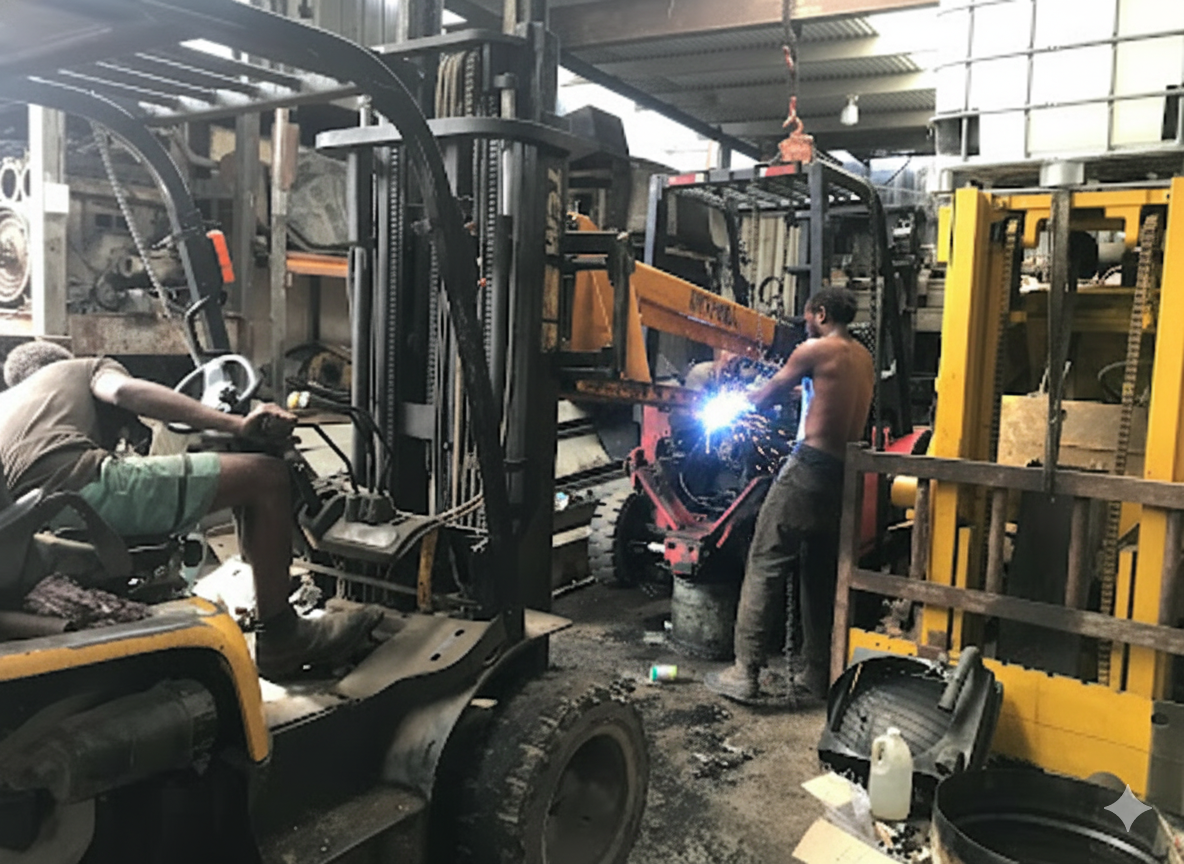
- Welding & Fabrication: In this tough environment, structural cracks on buckets, booms, and frames are inevitable. Sending a machine off-site for welding can take days. A partner with in-house welding for all kinds of irons and steels can perform the repair quickly and get your machine back to work.
- Custom Parts (The “Secret Weapon”): What happens when a unique pin or bushing breaks? Waiting for an import can stop your project for a month. A partner with a lathe machines workshop is a game-changer. They can fabricate a custom, high-strength replacement part the same day.
Building Your Port Moresby “Uptime Strategy”
You cannot afford to build your maintenance plan after a breakdown. You must have a strategy in place, and that strategy hinges on your local partner.
When evaluating a maintenance provider in the NCD, ask these critical questions:
- Are They a “One-Stop Shop”? Do you have to call one company for hydraulics, another for welding, and a third for engine diagnostics? This is a recipe for delay. Look for a single partner that integrates all these services. You need a team that offers everything from heavy machinery and accessories to diagnostics, hydraulics, welding, and a lathe workshop.
- Are They Truly Local and Responsive? A partner in Lae or Australia is too far away. You need a team physically located in the NCD, such as in Bomana Granville, NCD, POM. More importantly, do they offer an “On call service”? When your machine goes down at a critical moment, you need a team that will answer the phone and dispatch a technician immediately.
- Do They Have the Parts and the People? A great technician is useless if they are waiting on parts. Does your partner have a history of importing necessary machineries, equipments and related parts… with a reasonable price? Do they have skillful, professional and experienced employees who are committed to safe, responsible service?
Conclusion: Your Partner in Profitability
In Port Moresby’s booming but brutal environment, heavy machinery maintenance is not a “cost centre.” It is a critical investment in uptime, productivity, and profitability.
The difference between a successful project and a failed one often comes down to how you manage your downtime. Don’t let the heat, dust, and rain win. Build a robust strategy founded on daily preventive checks, modern diagnostics, and a comprehensive, responsive local partner.
Don’t wait for a breakdown to find a solution. Take control of your maintenance strategy.
For a comprehensive, on-call partner based right here in the National Capital District, contact QSJ Holdings Ltd (Hydraulic Station). We provide a complete solution, from on-site diagnostics and hydraulic hose pressing to full-service welding and motor repair, all designed to keep Port Moresby’s heavy industry moving.
- Email: qsjholdingspng@gmail.com
- Address: Section 0116, Lot 3122, Bomana Granville, NCD, POM
- P.O. Box: 2503 VISION CITY 1131, National Capital District