In the demanding heavy industries of Papua New Guinea—from sprawling construction sites in Port Moresby to remote mining and forestry operations—heavy machinery is the engine of productivity. The hydraulic systems within this equipment are its lifeblood, translating engine power into immense force. But this entire system hinges on one component that is all too often overlooked: the hydraulic hose.
A single hydraulic hose failure doesn’t just mean a simple repair; it means a complete operational halt. This is costly downtime—a cascade of lost revenue, project delays, and potential safety hazards.
For operators, managers, and maintenance crews across the National Capital District and beyond, understanding the early warning signs of hydraulic hose failure is the single most effective way to prevent this catastrophic downtime.
This guide will walk you through the top five signs of impending hydraulic hose failure, explain what they mean, and provide a clear strategy for prevention.
📈 The True Cost of Downtime
Before we look at the signs, it’s crucial to understand what’s at stake. “Downtime” is a mild term for what is often a financial disaster. When a critical piece of machinery like an excavator, bulldozer, or loader goes down, the costs multiply rapidly:
- Lost Productivity: The machine is idle. The operator is idle. The work stops. In a time-sensitive project, this can mean missing critical deadlines.
- Chain-Reaction Delays: That one excavator might be responsible for feeding a crusher, which feeds a conveyor, which loads a truck. Its failure brings the entire site to a standstill.
- Labour Costs: You are still paying your skilled workforce, even when their primary equipment is non-operational.
- Collateral Damage: A sudden hose burst can cause a catastrophic loss of hydraulic pressure, leading to uncontrolled movement of booms or attachments, endangering personnel. The high-pressure (3000+ PSI) fluid spray can also cause severe fluid-injection injuries, fire hazards, and significant environmental contamination.
- Expensive “Cure”: An emergency, on-site repair is always more expensive than a planned replacement. It often involves rush fees, potential damage to other components from the failure (like a pump running dry), and extensive cleanup costs.
When you understand these stakes, proactive maintenance isn’t just a “good idea”—it’s a core business strategy.
🚨 Top 5 Signs of Impending Hydraulic Hose Failure
Your hydraulic hoses are constantly communicating their health. You just need to know what to look for. A daily 5-minute visual inspection can save you weeks of downtime.
1. Visible Abrasion, Cracking, and Blistering
This is the most common and visible sign of a hose in distress.
- What it Looks Like:
- Abrasion: The outer cover of the hose is rubbed, scraped, or worn down, often exposing the steel wire reinforcement underneath.
- Cracking: The outer cover appears dried out, inflexible, and has visible cracks or crazing, much like an old, sun-damaged car tire.
- Blistering: The hose cover has bubbles, blisters, or a “spongy” feel.
- Why it Happens:
- Abrasion is caused by the hose rubbing against other hoses, machine components, or external objects. This is often a sign of improper routing or unsecured clamping. Once the wire reinforcement is exposed, it’s only a matter of time before it rusts and fails.
- Cracking is typically a sign of age or environmental exposure. Extreme heat (both internal fluid heat and external engine heat) and UV light from the sun break down the rubber compounds, making the hose brittle. A brittle hose cannot flex under pressure and will crack and fail.
- Blistering indicates that the inner tube of the hose has a pinhole leak, allowing high-pressure fluid to seep into the reinforcement layer and push the outer cover away. A blistered hose is a ticking time bomb and must be replaced immediately.
- What to Do: Do not operate the machine. A hose with exposed reinforcement or blistering has lost its structural integrity. It must be depressurized and replaced immediately.
2. Hydraulic Fluid Leaks (Especially at Fittings)
This may seem obvious, but many operators ignore “minor” drips or “sweating” fittings until it’s too late. A leak is never minor.
- What it Looks Like: Puddles of hydraulic fluid under the machine, or a visible coating of oil, grime, and dust clinging to a specific hose or fitting. The dirt sticks to the oil, making leaks easy to spot.
- Why it Happens: Leaks most commonly occur at the connection point—the metal fitting crimped onto the end of the hose.
- Improper Assembly: The fitting may not have been crimped correctly (over or under-crimped), allowing fluid to escape under pressure.
- Vibration and Stress: Constant machine vibration can slowly loosen fittings over time.
- Corrosion: In PNG’s humid and often coastal environment, rust and corrosion can attack metal fittings, compromising their seal.
- Pinhole Leaks: A tiny, invisible hole in the hose itself can spray a fine mist of hydraulic fluid. This is extremely dangerous, as the mist can be atomized, creating a serious fire or explosion hazard.
- What to Do: Immediately shut down the equipment and investigate the source. A leak is a clear sign the system is compromised. Remember, a pinhole leak can inject fluid through your skin, even from a distance. Never use your hand to find a leak; use a piece of cardboard or wood.
3. Hardened, Stiff, or Brittle Hoses
A healthy hydraulic hose should be firm but flexible.
- What it LooksLike: During an inspection (with the machine off and pressure released), you feel a hose that is rock-hard, inflexible, or makes a slight “crackling” sound when flexed.
- Why it Happens: This is a classic sign of internal heat damage or simply old age. High-temperature hydraulic fluid (running “too hot”) or high ambient heat (from the engine or exhaust) essentially “cooks” the rubber compounds from the inside out. The plasticizers that keep the hose flexible evaporate, leaving it hard and brittle.
- What to Do: A stiff hose has lost its ability to absorb vibration and pressure spikes. The next pressure spike will shatter it. Schedule this hose for replacement immediately, even if it’s not leaking yet. It’s also critical to investigate why it’s so hot. You may have a secondary problem, like a failing oil cooler or a stuck relief valve.
4. Kinked, Crushed, or Twisted Hoses
The path a hose takes is critical to its lifespan. Any restriction in its path is a point of failure.
- What it Looks Like:
- Kinks: Sharp bends in the hose that restrict or stop fluid flow.
- Crushing: The hose has been flattened, often from being run over or impacted by an object.
- Twisting: The hose appears to be “wrung out” or twisted along its length, a sign of improper installation.
- Why it Happens: Kinks and crushing are often the result of improper routing, poor clamping, or external impact. A twisted hose is almost always an installation error. Hoses are designed to flex in one or two planes (bend), but never to twist.
- Why it’s a Problem: A kink or crush creates a bottleneck. This restriction causes fluid velocity to skyrocket and heat to build up, eroding the inner tube of the hose. It also creates extreme pressure upstream and starves components downstream. A twisted hose puts an immense structural load on the hose and its fittings, guaranteeing a premature failure at the connection point.
- What to Do: Replace the hose immediately. Ensure the new hose is routed correctly, meets the manufacturer’s minimum bend radius, and is installed without any twists.
5. Corroded, Damaged, or Slipped Fittings
The hose is only as strong as its connection. The metal fittings at each end are common failure points.
- What it Looks Like:
- Corrosion: Red rust or white/grey oxidization on the metal fittings.
- Damage: Cracks, dents, or stripped threads on the fitting.
- Slippage: You can see a gap appearing between the hose and the metal “collar” of the fitting, or the fitting appears to be pulling away from the hose.
- Why it Happens: Corrosion is a major issue in tropical and coastal climates. It weakens the metal, making it brittle and compromising the seal. Damage can happen during improper installation (e.g., over-tightening) or from external impacts. Slippage is a sign of a bad crimp, or that the hose has been subjected to extreme and repeated pressure spikes, and is a sign of imminent, catastrophic failure.
- What to Do: Any damaged or heavily corroded fitting is a liability. If you see any sign of the fitting slipping off the hose, shut down the machine immediately. This hose is holding on by a thread and its failure is moments away.
🔧 How to Prevent Costly Downtime: A Proactive Strategy
You don’t have to wait for these five signs to appear. A proactive maintenance strategy, supported by a reliable local partner, can turn unplanned downtime into scheduled, manageable maintenance.
1. Implement Daily Visual Inspections
Train your operators to perform a 5-minute “walk-around” inspection at the start of every shift. Look for the 5 signs listed above. Catching a problem in the morning, before the machine is under load, is the easiest fix you’ll ever get.
2. Use High-Quality Replacement Parts
When a hose does need replacing, don’t opt for the cheapest option. Your equipment runs in harsh conditions and needs parts that can withstand the pressure. Using high-quality hydraulic hoses and parts is critical. Sourcing necessary parts from reputable overseas suppliers ensures they meet specifications and offer a reliable service life.
3. Partner with a Local, Full-Service Expert
In a place like Papua New Guinea, you can’t afford to wait weeks for a part or a technician. You need a local partner who understands the urgency.
This is where QSJ Holdings Ltd (Hydraulic Station) becomes your greatest asset. Based right here in the National Capital District, Port Moresby, we are not just a parts supplier; we are a complete solutions provider.
- On-Call Service: We understand that downtime is an emergency. Our on-call service is designed to get you back up and running fast.
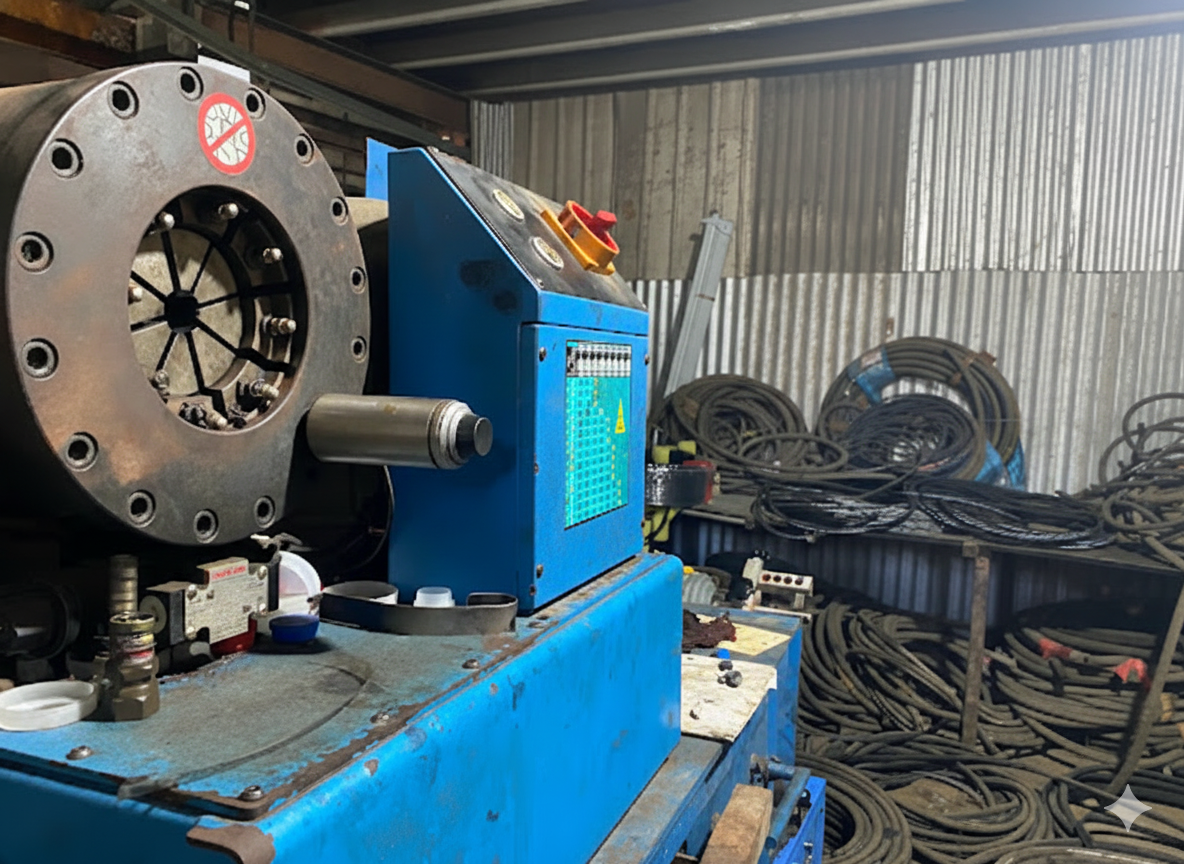
- Expert Hose Repair: We specialize in hydraulic hose repairments and have our own hydraulic press. This means we can fabricate and custom-build replacement hoses quickly and accurately, right here in our workshop.
- Full Diagnostics: Not sure why a hose failed? Our diagnostics for machines and vehicles can pinpoint the root cause, whether it’s a simple hose or a more complex motor issue.
- Comprehensive Capabilities: We are more than just hoses. With a lathe machines workshop and welding services for all kinds of irons and steels, we can repair or fabricate related components, providing a true one-stop-shop solution.
- Skilled Professionals: Our company is built on skillful, professional, and experienced employees who are committed to providing safe, responsible service.
Conclusion: Don’t Wait for the “Bang”
Hydraulic hose failure is almost always a predictable event. The warning signs—abrasion, leaks, stiffness, kinks, and bad fittings—are clear indicators that a failure is imminent.
By training your team to spot these signs and partnering with a responsive, local expert like Hydraulic Station, you can take control of your maintenance schedule. You can replace a failing hose on your terms, during planned maintenance, rather than reacting to a catastrophic failure that halts your entire operation.
Don’t let a $200 hose cost you $20,000 in downtime.
Don’t wait for a failure to shut you down. If you see any of these signs, or if you want to set up a preventative maintenance plan, contact the expert team at QSJ Holdings Ltd (Hydraulic Station) today.
- Email: qsjholdingspng@gmail.com
- Address: Section 0116, Lot 3122, Bomana Granville, NCD, POM
- Services: Hydraulic Hose Repair , On-Call Service , Heavy Machinery Maintenance , Vehicle Diagnostics , Welding, and more.